

Chapter 1
IN THIS LESSON
Welcome to Chapter 1. In this lesson, we will explore how human activity impacts our planet's vital systems and examine the distinct, yet deeply interconnected, forms of environmental degradation.
Here is what you will learn in this chapter:
📘 Chapter 1 Overview: Types of Pollution
1. Air Pollution: The Atmosphere Under Threat
The Invisible Hazards: Understand the difference between primary pollutants (like carbon monoxide and sulfur dioxide) and secondary pollutants (like smog).
Industrial & Mobile Sources: Examine how fossil fuel combustion from factories, power plants, and daily transportation alters atmospheric chemistry.
Global Impacts: Learn how air pollution drives broader environmental crises, including the greenhouse effect, ozone layer depletion, and the formation of acid rain.
2. Water Pollution: Degrading Our Liquid Lifelines
Point vs. Non-Point Sources: Discover how to differentiate between direct contamination (like industrial discharge pipes) and diffuse runoff (like agricultural fertilizers and urban stormwater).
Ecological Disruption: Study the devastating effects of marine debris, microplastics, oil spills, and chemical toxins on aquatic ecosystems.
The Nutrient Crisis: Learn how excessive nutrient runoff triggers eutrophication, leading to massive algal blooms that deplete oxygen and create aquatic "dead zones."
3. Land Pollution: The Degradation of Our Soil
Solid Waste Management: Analyze the impact of unsustainable consumer waste, overflowing landfills, and the persistence of non-biodegradable materials.
Agricultural & Industrial Contamination: Examine how the heavy use of pesticides, chemical fertilizers, and improper disposal of hazardous industrial waste ruins soil fertility.
The Ripple Effect: Understand how soil contamination doesn't stay on land—hazardous chemicals inevitably seep into groundwater or wash into nearby streams.
🔄 The Interconnected Web
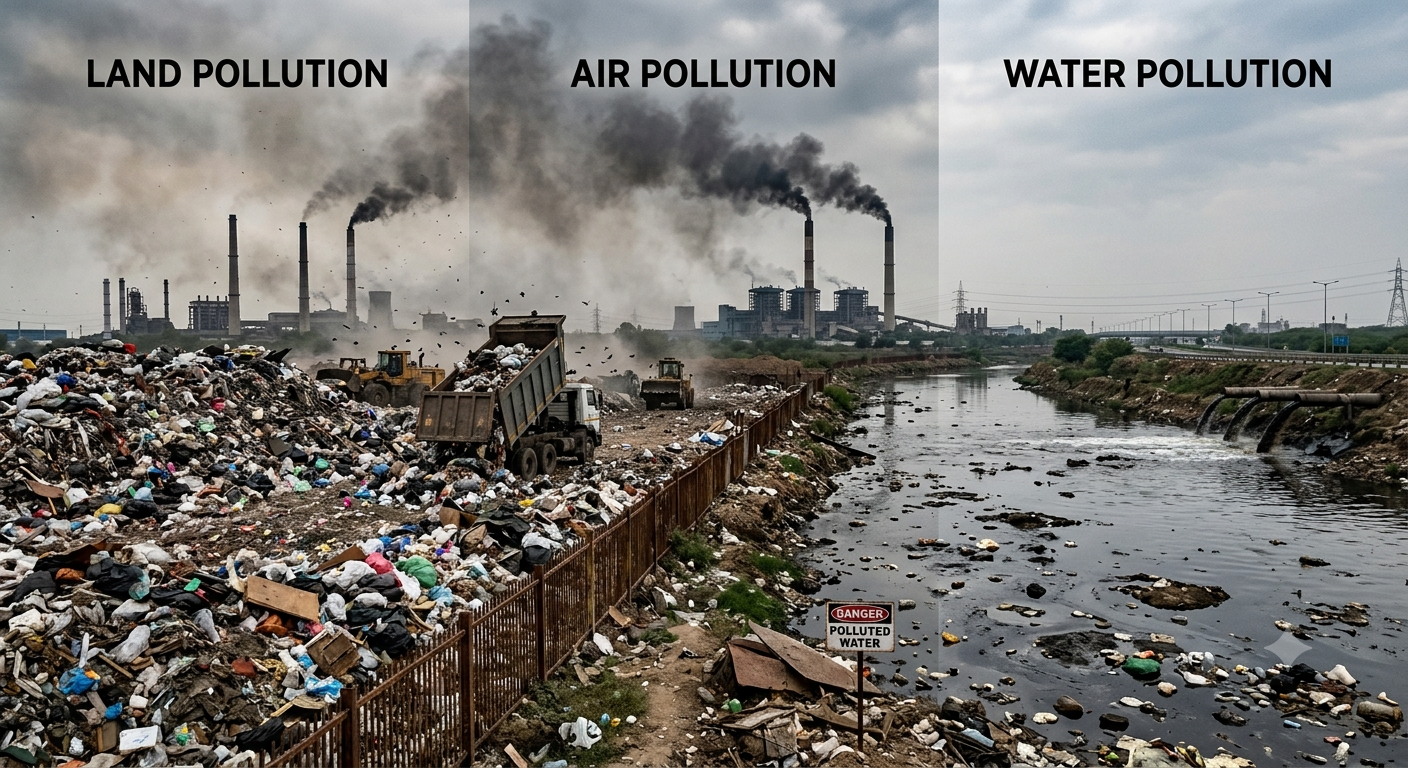
By the end of this lesson, you will look beyond these categories as isolated problems. You will understand how land, air, and water pollution form a continuous cycle, where a pollutant released into the air can fall as acid rain onto the land, eventually leaching into our water supply.
-
Add a short summary or a list of helpful resources here.