Big Ideas, Real Impact.
Recycling 101: A Practical Manual
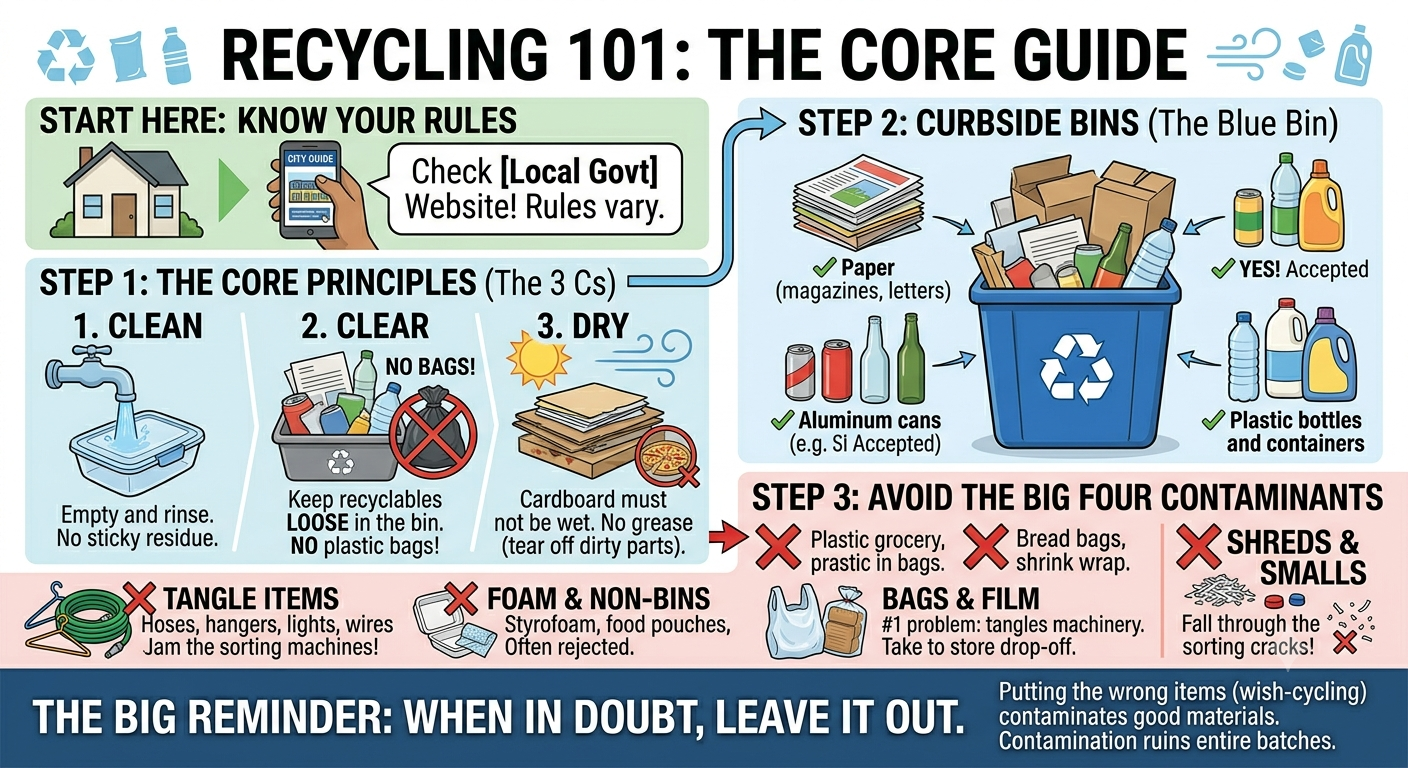
Recycling is an essential pillar of waste management, but its effectiveness depends entirely on the accuracy of our participation. This manual outlines the best practices to ensure your efforts result in resource recovery rather than contamination.
1. Know Your Local Guidelines
Recycling rules are not universal. They are determined by your local municipality's processing capabilities.
Check your local government website: Search for "[Your City/County] recycling guide" to find a list of accepted and prohibited items.
The "Rule of Thumb": If you are unsure if an item is recyclable, it is safer to put it in the trash. When in doubt, leave it out—otherwise, you risk contaminating an entire load of good material.
2. The Core Principles (The 3 Cs)
To ensure materials are processed correctly, follow the 3 Cs:
PrincipleExplanationCleanEmpty all food and liquid residue. A quick rinse is enough—heavy scrubbing is not required, but items must not be "dripping."ClearKeep recyclables loose. Never bag your recyclables in plastic trash bags, as these tangle in the sorting machines and are often discarded by workers.DryEnsure containers are relatively dry. Moisture can degrade paper and cardboard, making them unrecyclable.
3. Understanding the Sorting Process
Visualizing how materials are separated helps explain why "wish-cycling" (tossing things in the bin hoping they are recyclable) is harmful.
4. Common Contaminants to Avoid
These items often cause major issues in recycling facilities:
Plastic Bags & Films: These are the #1 cause of mechanical failures; they wrap around the axles of conveyor belts, forcing the entire plant to shut down for manual removal.
Greasy Pizza Boxes: Grease inhibits the recycling process. Tear off the clean top of the box to recycle it, but discard the greasy bottom.
Tangled Items: Hoses, hangers, and fairy lights (known as "tanglers") are notorious for destroying sorting equipment.
Small Shreds: Anything smaller than a credit card usually falls through the cracks or gets mis-sorted.
5. Beyond the Curb: Specialty Recycling
Not everything can go in the blue bin. Many items require specialized disposal:
Electronics (E-Waste): Computers, phones, and batteries contain toxic materials and must be taken to dedicated e-waste collection sites.
Hazardous Materials: Paint, motor oil, and chemicals should never go in household bins. Look for local hazardous waste collection events.
Textiles: Many charities accept clothing that is no longer wearable for textile recycling.
Pro-Tip: Focus on reducing and reusing first. Recycling is a secondary solution; the most effective way to interrupt the journey of trash is to prevent the item from being created in the first place.
Would you like to know how to find a local drop-off center for items that aren't accepted in your standard residential curbside pickup?