

Chapter 2
IN THIS LESSON
The Intervention: How Recycling Breaks the Chain
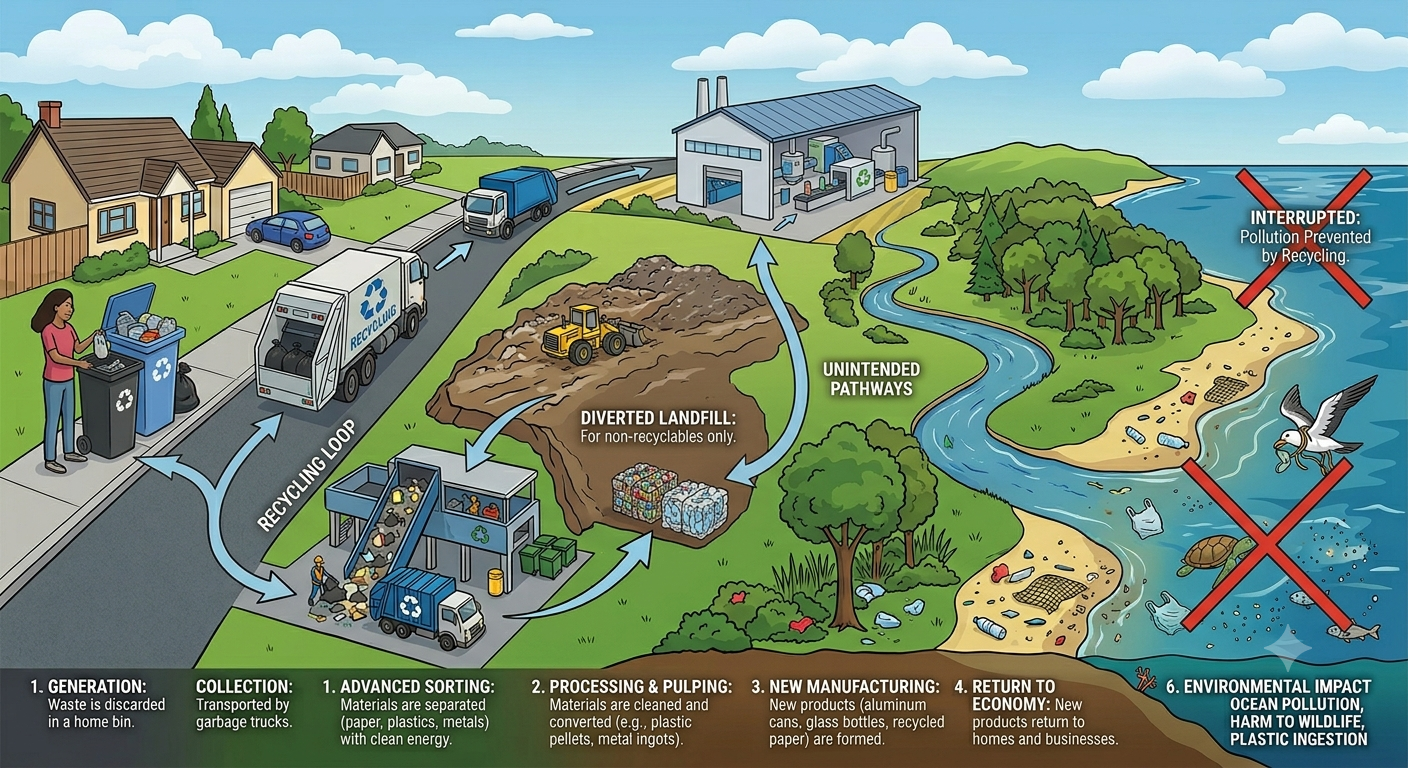
The journey toward an environmental disaster is not inevitable. It is a path defined by choices, and recycling acts as a critical intervention that severs the link between human consumption and ecological harm. When we place an item into the correct recycling bin, we aren't just "throwing it away"—we are initiating a technical rescue mission.
The Pivot Point: Diversion
The interruption begins the moment the item is separated from the general waste stream. By choosing to recycle, you effectively divert a material from its original, linear trajectory—which leads directly to a landfill or potential environmental leakage—and redirect it into a circular loop.
The Transformation
Once the item reaches a material recovery facility, it is no longer treated as "trash" to be buried; it is treated as a raw material. This is where the interruption becomes structural:
Reclaiming Value: Instead of letting materials languish in a landfill for centuries, the system breaks them down into their base components—plastic pellets, aluminum ingots, or paper pulp.
Resource Preservation: By using these reclaimed materials, the manufacturing industry significantly reduces the need for "virgin" resources, such as extracting new oil for plastic or mining bauxite for aluminum.
Closing the Loop
The final, and most vital, part of this interruption is the return to the economy. When a recycled aluminum can is transformed into a new beverage container or a recycled plastic bottle becomes a piece of polyester clothing, the "trash" has been successfully rehabilitated into a functional product.
This process halts the cycle of pollution. By keeping materials in the economy and out of the environment, recycling ensures that the item’s lifespan is not measured by its ability to pollute, but by its utility to society.
The Lesson: Recycling turns a "dead end" into a "roundabout." It transforms our waste into the building blocks for tomorrow, proving that the most powerful tool for conservation is the decision made at the recycling bin.
Given how critical the sorting process is to this success, would you be interested in learning about the most common "wish-cycling" mistakes that can accidentally contaminate an entire batch of recyclables?
-
Add a short summary or a list of helpful resources here.